The 5 Biggest Mistakes in ADAS Calibrations (And How to Avoid Them)

The 5 Biggest Mistakes in ADAS Calibrations (And How to Avoid Them)

Discover the 5 most common mistakes in ADAS calibrations and how to avoid them. Practical advice for garages with professional equipment.

Friday, October 31, 2025 - 5 min read

Share this page

The 5 Most Common Mistakes in ADAS Calibrations (and How to Avoid Them)

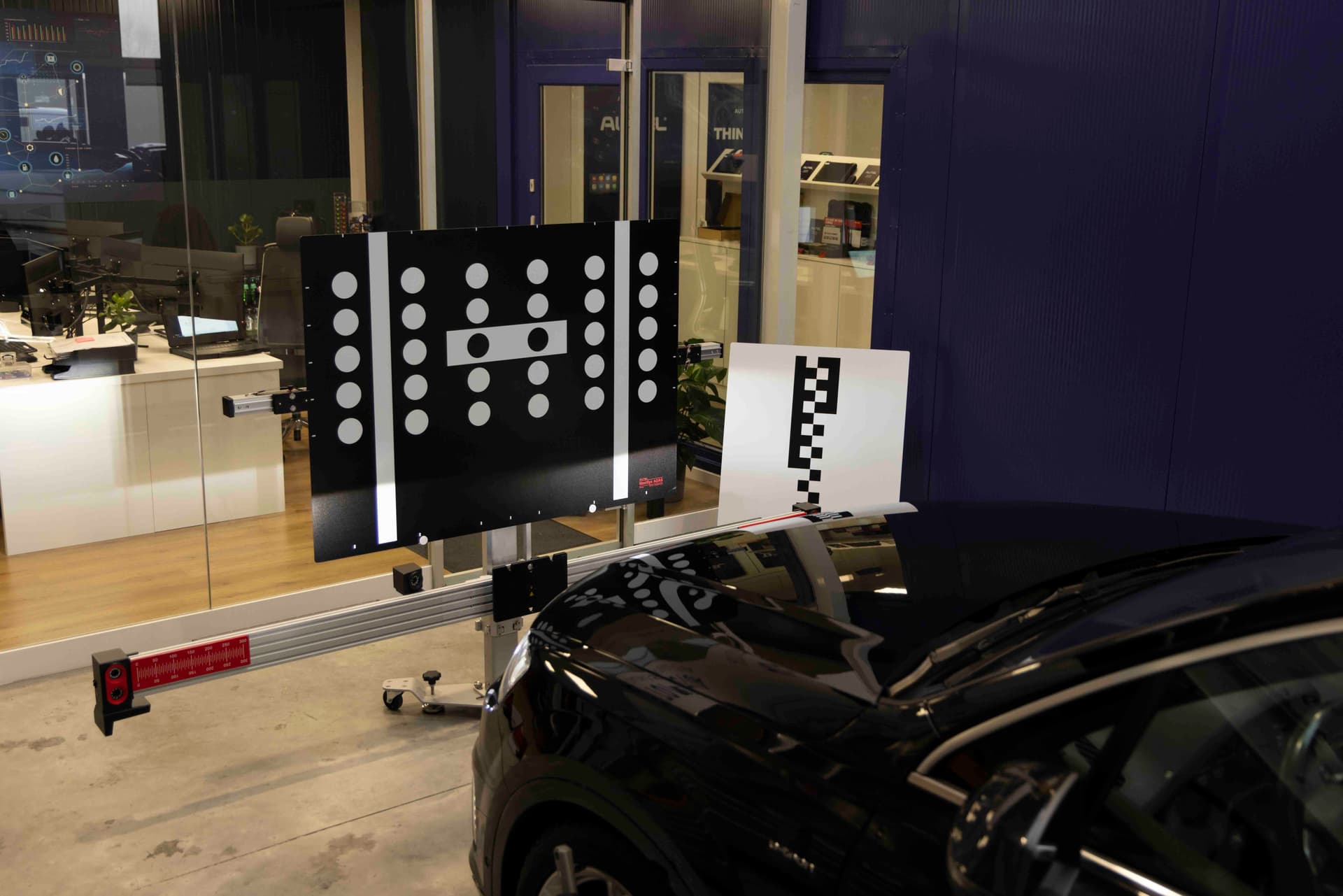
Many modern vehicles are equipped with Advanced Driver Assistance Systems (ADAS) that enhance safety and driving comfort. After repairs or adjustments to sensors, these systems must be precisely calibrated according to factory specifications. Many garages, however, struggle with correctly performing ADAS calibrations, for example due to incorrect distances, unfavorable lighting, or inaccurate calibration heights – this article helps to prevent those mistakes.
Additionally, we offer all ADAS calibration devices, targets, and complete sets, so you can always work with the correct equipment. Below, we discuss the five most common mistakes in ADAS calibrations and how you can prevent them, so that driver assistance systems function optimally again after calibration.


1. Incorrect Distance to the Calibration Target

The mistake:
A common mistake is that the calibration target (the panel or target) is not placed at the exact prescribed distance and position relative to the vehicle. Even a small measurement error can have major consequences: a deviation of one degree in angle can cause a camera or sensor to miss an object on the road by meters. If the target is too close, too far away, or not precisely centered, the camera or radar will "look" incorrectly.

Why it happens:
Due to haste, incorrect measurement, or working with "approximately right". OEM manuals precisely specify the distance and height at which targets must be placed, often with millimeter tolerance. Not following this means: unreliable ADAS operation.

How to prevent this?

  • Measure with extreme precision: use lasers or other professional measuring instruments.

  • Center precisely on the centerline: almost every manufacturer calibrates relative to the vehicle's centerline.

  • Double-check distances: always perform a second measurement and work with floor markings.
    Preferably use official calibration kits – you can find all OEM targets and measuring setups with us.


2. Incorrect Calibration Height or Uneven Surface

The mistake:
Many calibrations fail because the panel is at an incorrect height or the car is on an uneven floor. A few centimeters of height difference or minimal slope already changes the viewing angle of the camera or radar.

Why it happens:
Not every garage has a perfectly flat floor. Height is also often set "by eye". However, manufacturers require a completely flat surface AND exact height adjustment.

How to prevent this?

  • Ensure a flat floor: check with a spirit level or calibrate on an alignment rack.

  • Set the target height exactly: measure from the ground with a measuring tape or laser altimeter.

  • Minimize suspension influences: the car must be at normal ride height, not jacked up or extra loaded.


3. Unfavorable Lighting Conditions or Distracting Background

The mistake:
ADAS cameras read patterns on targets. Poor lighting, reflections, or a busy background can cause the camera to not recognize the target or read it incorrectly.

Why it happens:
The influence of light, shadow, and reflections is underestimated. High-gloss floors, backlighting, or cluttered backgrounds lead to recognition errors.How to prevent this?

  • Calibrate in a controlled environment: indoors, with constant and diffused lighting.

  • Eliminate reflections: use matte floors or mats under the target.

  • Create a calm background: place the target in front of a plain wall or curtain.

  • Prevent moving shadows: close doors and prevent people from walking by during calibration.

4. Skipping Necessary Calibrations or Preparations

The mistake:
Sometimes, calibration is not performed after repairs (such as windshield replacement) or preparation steps are skipped, such as a pre-scan or wheel alignment. As a result, sensors are calibrated to an incorrect base setting.

Why it happens:
Ignorance or time pressure. An ADAS system often appears to work, while the calibration is incorrect due to fault codes or a misaligned vehicle.How to prevent this?

  • Always calibrate when prescribed: never skip a necessary ADAS calibration.

  • Perform a pre-scan and post-scan: check all DTCs before and after calibration.

  • Prepare the vehicle according to specifications: correct tire pressure, correct loading, correct ride height.

  • Check wheel alignment: alignment is part of calibration. A misaligned vehicle means a misaligned calibration.


5. Using Incorrect or Outdated Calibration Equipment

The mistake:
Working with unsuitable targets, outdated diagnostic tools, or improvised targets. Even a dropping battery voltage during the process can cause errors.

Why it happens:
Lack of investment, knowledge, or time. Without recent software and official targets, recognition errors or failed procedures occur.

How to prevent this?

  • Invest in the right tools: complete OEM targets, rigs, lasers, and diagnostic tools.
    Do not use homemade solutions.

  • Keep software up-to-date: regular updates are necessary for new models.

  • Train your team: follow brand-specific procedures and work with checklists.

  • Manage power supply: use a battery charger during static calibrations.


Conclusion

Correct ADAS calibration requires precision, a controlled environment, and professional tools. Measure exactly, work on a flat floor, ensure good lighting, and prepare the vehicle correctly. Always use approved equipment and never skip steps.
This way, you prevent errors, increase safety, and deliver reliable calibrations. With the right approach (and the right tools, which are available from us), you can perform every ADAS calibration correctly the first time.